Advanced example
Pod Affinity (Co-locate)
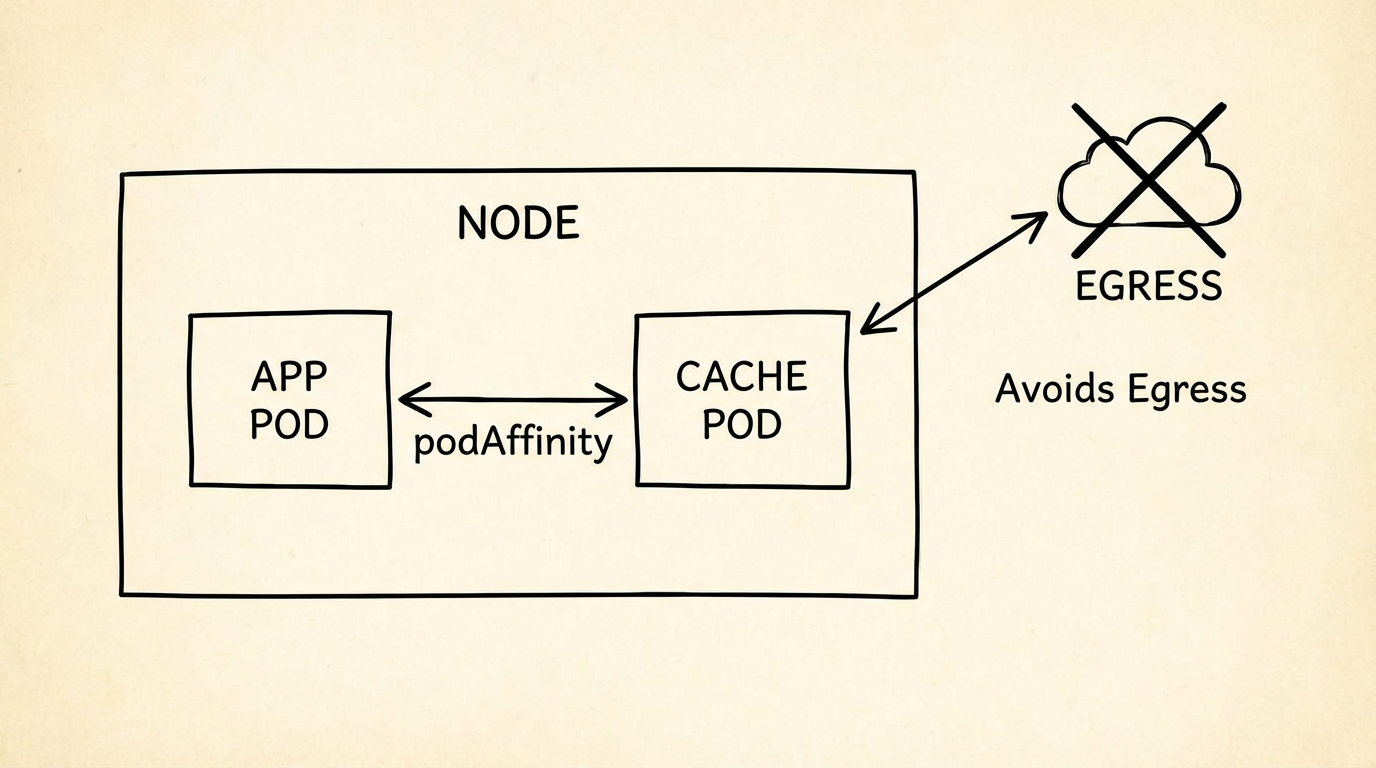
Co-locate related pods on the same node to avoid egress fees.
Traffic between pods on different burst nodes can incur cloud egress charges. Use podAffinity to co-locate related pods (e.g. app + cache) on the same node. Use topologyKey: kubernetes.io/hostname so they land on the same host.
Soft affinity (preferred)
# Worker pods prefer to run on the same node as the app (reduces egress)
apiVersion: apps/v1
kind: Deployment
metadata:
  name: worker
spec:
  replicas: 2
  selector:
    matchLabels:
      app: worker
  template:
    metadata:
      labels:
        app: worker
    spec:
      affinity:
        podAffinity:
          preferredDuringSchedulingIgnoredDuringExecution:
          - weight: 100
            podAffinityTerm:
              labelSelector:
                matchLabels:
                  app: my-app
              topologyKey: kubernetes.io/hostname
      containers:
      - name: worker
        image: busybox:1.36
        command: ["sleep", "infinity"]
        resources:
          requests:
            cpu: "500m"
            memory: "512Mi"
The scheduler tries to co-locate but will place elsewhere if needed.
Hard affinity (required)
Use requiredDuringSchedulingIgnoredDuringExecution when co-location is mandatory. The pod will stay Pending until a node has a matching pod.
affinity:
  podAffinity:
    requiredDuringSchedulingIgnoredDuringExecution:
    - labelSelector:
        matchLabels:
          app: my-app
      topologyKey: kubernetes.io/hostname